A wasp colony cannot help leaving evidence. It commutes, it strips timber for building material, it loses workers into the house, and at scale it is audible through plasterboard. Learn to read those traces and you can tell a genuine nest from summer background noise without going near anything. Here is what to look for around a Altrincham property, grouped by where you will notice it.
Evidence outdoors
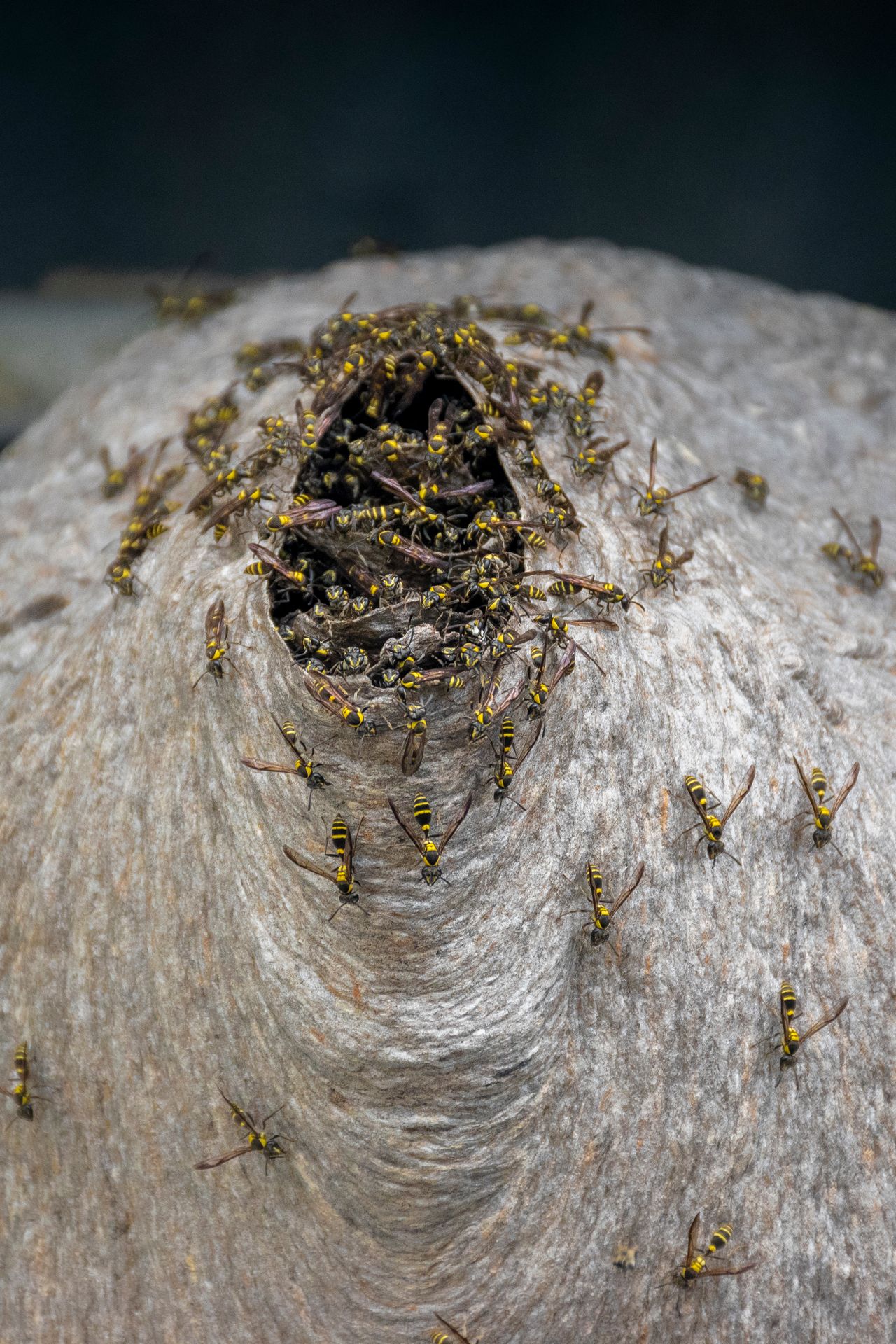
The commute. Watch your rooflines, shed and garden walls from a distance on a warm, dry afternoon. Nest traffic has a signature: wasps arriving from several directions, funnelling down to one opening little bigger than a coin, disappearing inside, and others emerging to climb away in straight lines. Casual foragers drift and browse; commuters mean business. Two minutes of patient watching usually settles it, and our guide to confirming an active nest turns the watch into a simple count.
Stripped timber. Fence panels, pergolas and garden benches around Bowdon and Hale develop fine pale scribbles in the grey weathered surface during a nest year. That is wasps shaving wood fibre for paper. Sometimes you can hear the rasping from a metre away, a tiny dry scratching against the grain.
Visible structure. In sheds, hedges and open eaves the nest itself may be on show: a grey, layered ball with a swirled surface, anywhere from orange-sized upwards. Ground colonies show only a busy hole in a lawn, border or old root plate, which is why mowers and strimmers find them first.
Evidence indoors
Repeat visitors upstairs. A wasp a day appearing in the same bedroom or bathroom, with the windows shut, is a strong pointer to a colony in the roof or cavity leaking workers into the house. The pattern matters; one-off visitors in July mean nothing.
Windowsill casualties. Wasps that stray into living space fly to the light and exhaust themselves against the glass. A growing collection of dead and dying wasps on upstairs sills is the indoor equivalent of the flight line outside.
Noise through the ceiling. At several thousand residents, a colony becomes audible: a soft sustained rustle above a bedroom or behind a stud wall, plainest at night. Anything you can hear deserves prompt attention, because audible means large. The loft and roof guide covers this situation in full.
Favourite spots on local housing
- Roof voids behind slipped slates on the Edwardian streets of Bowdon and The Devisdale, and under tile gaps everywhere else.
- Timber soffit boxes on the 1930s semis that fill Timperley and the roads towards Sale, where shrunken joints open a private corridor.
- Party-wall rooflines on Broadheath's Victorian terraces, where one nest can produce traffic across three back yards.
- Sheds, garden offices and garages, warm and quiet through the working week.
- Old burrows and bank sides, including gardens running down to Timperley Brook, where common wasps happily nest underground.
- Air bricks and cavity gaps, an easy walk-in to a dry wall void.
Check it is not bees
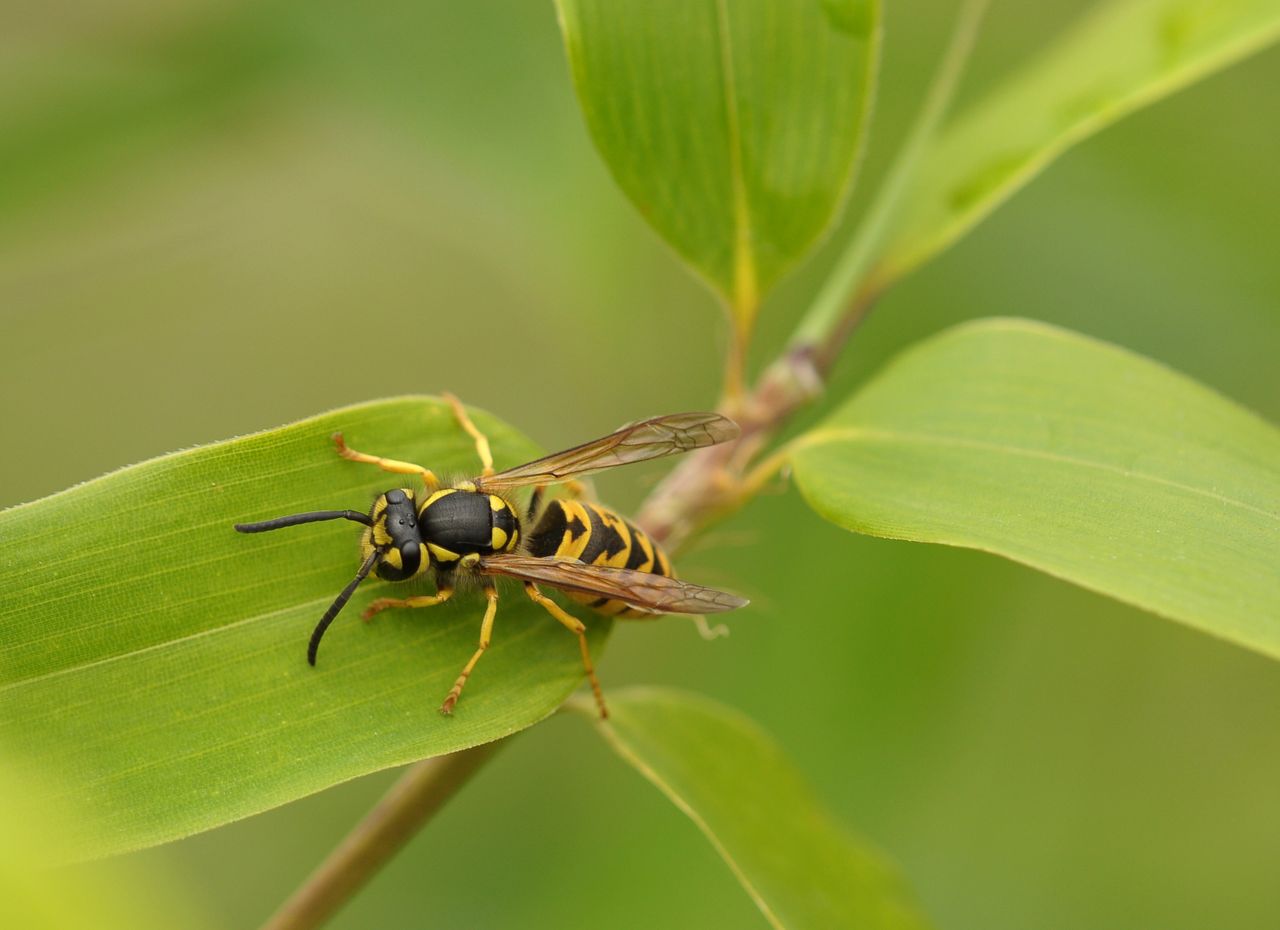
Round, furry, slow fliers with an audible drone are bumblebees, and the right response is usually to leave them entirely alone; see the bumblebee page for the exceptions. Slim amber-brown insects in very large numbers, or a hanging cluster the size of a rugby ball, are honeybees, which belong with a beekeeper rather than a pest controller. Thirty seconds with the identification guide sorts one from the other before anybody spends money.
Four things to leave alone
- The entrance hole. Plugging it traps thousands of wasps that will chew a new route, frequently into the house.
- Supermarket sprays at height. An aerosol from below angers far more wasps than it kills and puts you on a ladder mid-swarm.
- Torchlit night raids. Colonies defend in darkness too, and the beam guides them to you.
- Petrol, boiling water and fire. All three appear in local casualty stories every summer. None reliably kills a colony.
Once the signs add up, treatment is a single visit at £60 for any wasp or hornet nest, anywhere across Altrincham and Trafford, with no call-out fee and a free return in the rare case a colony survives. You do not need to pinpoint the nest; describing what you have seen is plenty. Ring 07770 015197 and most calls made before mid-afternoon are handled the same day.
The signs add up?
£60 fixed, same-day across Altrincham and Trafford where possible. Point us at the activity and we do the rest.
Call to BookFrequently Asked Questions
A repeating flight line. Wasps commuting to a nest converge from different directions on one small opening and vanish into it, over and over. Pick a warm, dry afternoon, watch the suspect spot without looking away for a couple of minutes, and the pattern either shows itself or it does not. Nothing else you can check from the ground is as conclusive.
They are collecting building material. Workers shave a fine layer of weathered wood from fences, sheds, garden furniture and pergolas, chew it to a pulp, and turn it into nest paper. Pale, roughly parallel lines etched into grey timber are the trace they leave. It confirms wasps are nesting somewhere in range, though the nest itself may sit in a neighbouring garden.
A low, dry, continuous rustling, sometimes compared to paper being crumpled very slowly in another room. It is steadiest on warm, quiet evenings. A colony that senses vibration may briefly rise in volume, a crackling surge, which is a firm signal to stop knocking on the wall and step away.
Established indoor nests can. A large colony in a loft or cavity sometimes gives off a faint sweetish, slightly fermented smell in the room below, and a dying colony in autumn can smell distinctly unpleasant as brood breaks down. Any persistent odd smell paired with wasp sightings upstairs deserves investigation.
It depends almost entirely on the month. The same nest that held a few dozen workers in June can hold thousands by late August. Judge urgency by the calendar and the traffic rather than the number of wasps you happen to see in the garden, since most of the colony is always inside or out foraging.
Sometimes, and we will say so when that is the honest answer. A nest far from doors, paths and play areas in late season can be left to die off naturally. A nest anywhere people and pets pass daily is a different case, because colonies grow and grow more defensive until October. Waiting rarely improves that situation.